
Why Big Purchases Feel Way Harder Than They Should (And What Most People Get Wrong)
Big purchases feel overwhelming for a reason. Learn how pricing, timing, and modern marketplaces affect your decisions—and how to buy smarter.
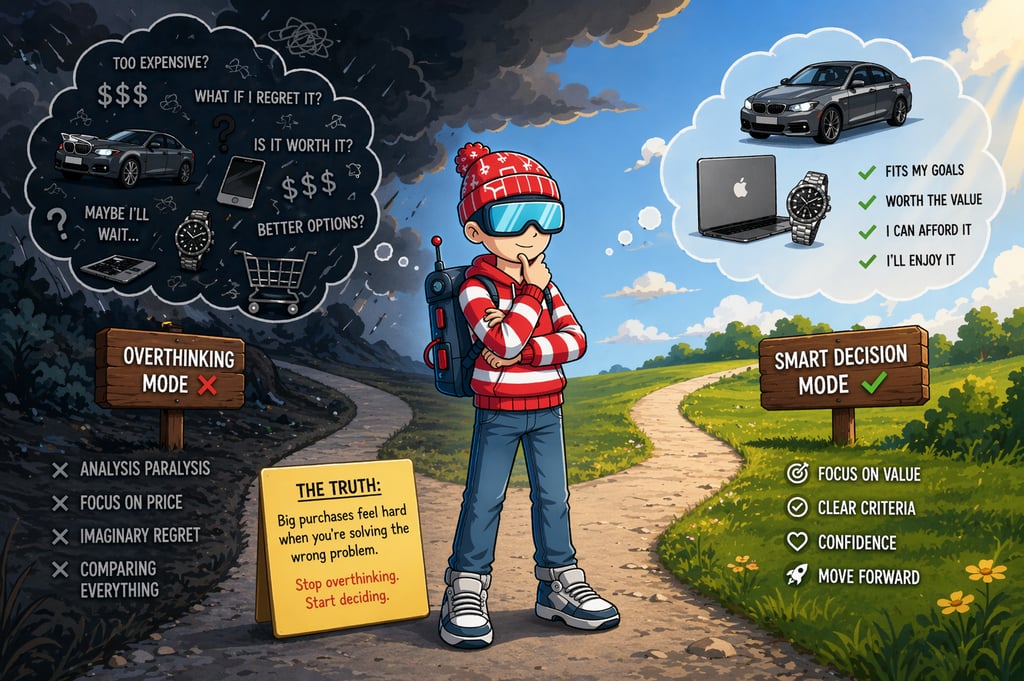

Big purchases aren’t supposed to feel this stressful.
But they do.
Not because they’re complicated—but because everything around them is.
You’re not just buying something. You’re trying to make the “right” decision with incomplete information, too many options, and a real fear of getting it wrong.
That’s a different problem entirely.
Too Many Options = Decision Fatigue
Here’s the thing: more options sound good in theory.
In practice, they’re exhausting.
You search for something expensive—equipment, tools, anything high-ticket—and suddenly you’re dealing with:
dozens of listings
inconsistent pricing
unclear condition details
sellers who all describe things differently
You start comparing.
Then you keep comparing.
Then you forget what you were even comparing in the first place.
That’s decision fatigue.
And once it kicks in, your brain stops optimizing for value—and starts optimizing for relief.
Most People Don’t Actually Know What “Fair Price” Is
Let’s be honest.
Most buyers don’t really know what something should cost.
They just know what feels expensive.
And those are not the same thing.
A price can feel high and still be fair.
A price can feel low and still be a bad deal.
Because price isn’t just about the item—it’s about context:
how fast it needs to sell
how many people want it
how informed the buyer is
Without that context, price becomes guesswork.
And guesswork leads to hesitation.
The Internet Didn’t Simplify Buying—It Fragmented It
Buying used to be simple.
You had:
stores
dealers
a few known places
Now?
Everything is everywhere.
You’re looking at:
marketplaces
private sellers
listings with no standard format
platforms with completely different rules
And they don’t operate the same way.
Some are optimized for profit.
Others are optimized for speed.
Some are curated.
Others are chaos.
That’s why comparing across them feels so inconsistent.
Because it is.
Not All Selling Environments Play by the Same Rules
This is where things get interesting.
Different platforms have different incentives.
And those incentives shape pricing.
For example:
Retail = maximize margin
Resale = maximize return
Liquidation = move inventory
Those goals are not the same.
And when the goal changes, pricing behavior changes too.
That’s why in environments like marketplaces like this, you’ll see prices behave differently.
The goal isn’t always to get the highest possible price.
Sometimes it’s just to sell.
Fast.
And that creates opportunities—but only if you recognize what you’re looking at.
Why People Default to the “Safe” Option
When decisions feel uncertain, people look for safety.
Not actual safety—perceived safety.
That usually means:
buying from a familiar source
choosing the middle-priced option
avoiding anything that feels “too good” or “too risky”
It feels rational.
But it’s often just a shortcut.
Because what you’re really doing is avoiding the discomfort of not knowing.
And that discomfort is expensive.
Overpaying Rarely Feels Like Overpaying
Nobody walks away thinking, “Yeah, I definitely overpaid.”
It doesn’t feel like that.
It feels like:
“At least I’m done with it”
“This one seemed more reliable”
“I didn’t want to risk the cheaper option”
That’s the psychology of overpaying.
It hides behind relief.
You’re not buying value—you’re buying certainty.
And certainty costs more than most people realize.
Timing Is a Bigger Factor Than People Think
Same item.
Different timing.
Completely different price.
That’s not random.
That’s how markets behave.
Timing affects:
how many buyers are active
how urgently sellers want to move inventory
how competitive the environment is
But most people don’t track timing.
They just show up when they need something.
And when you show up late, you’re stuck with what’s left—or what’s expensive.
Smart Buyers Don’t Move First—They Observe First
This is the part people skip.
Observation.
Before making a big purchase, experienced buyers spend time watching:
how prices fluctuate
how listings are structured
what actually sells vs what sits
It looks passive.
It’s not.
It’s data collection.
And once you have enough of it, decisions stop feeling heavy.
They start feeling obvious.
Speed Is Only Useful When You Understand the System
Everyone wants to be fast.
But speed without context is just guessing faster.
Real speed comes later.
After:
you understand pricing patterns
you recognize good deals instantly
you know what to ignore
That’s when decisions feel easy.
Not because they are—but because you’ve removed uncertainty.
The Real Skill Isn’t Buying—It’s Recognizing
People think buying is the skill.
It’s not.
Recognizing is.
Recognizing:
when something is priced well
when something is overpriced
when something isn’t worth your time
That only comes from exposure.
Not from reading more.
Not from thinking harder.
From seeing enough examples that patterns start to repeat.
Why Slowing Down Feels Wrong (But Works)
Slowing down feels inefficient.
Especially when you need something.
But here’s the trade-off:
Move fast → higher chance of mistakes
Move slower → higher chance of clarity
And clarity compounds.
Once you understand the system, you don’t need to slow down anymore.
You just see better.
What Most People Actually Need (But Don’t Realize)
It’s not more options.
It’s not more advice.
It’s not even better instincts.
It’s exposure.
Because once you’ve seen enough:
pricing makes sense
platforms feel predictable
decisions stop feeling heavy
And that’s when buying gets easier.
Not because the system changed.
But because you finally understand it.
One Last Thought
Big purchases don’t feel hard because they are hard.
They feel hard because you’re interacting with a system you haven’t fully mapped yet.
Once you do, everything shifts.
Not dramatically.
Just enough that you stop reacting—and start recognizing.
And honestly?
That’s the difference between guessing and deciding.
Subscribe to my newsletter