
What Tech Will Look Like in 2035
What will technology actually feel like in the future? In this TechNaldo capstone article, we explore how tech will quietly fade into the background by 2035 — becoming more ambient, more trusted, and less attention-seeking. A thoughtful, grounded look at the future beyond hype, gadgets, and sci-fi predictions.
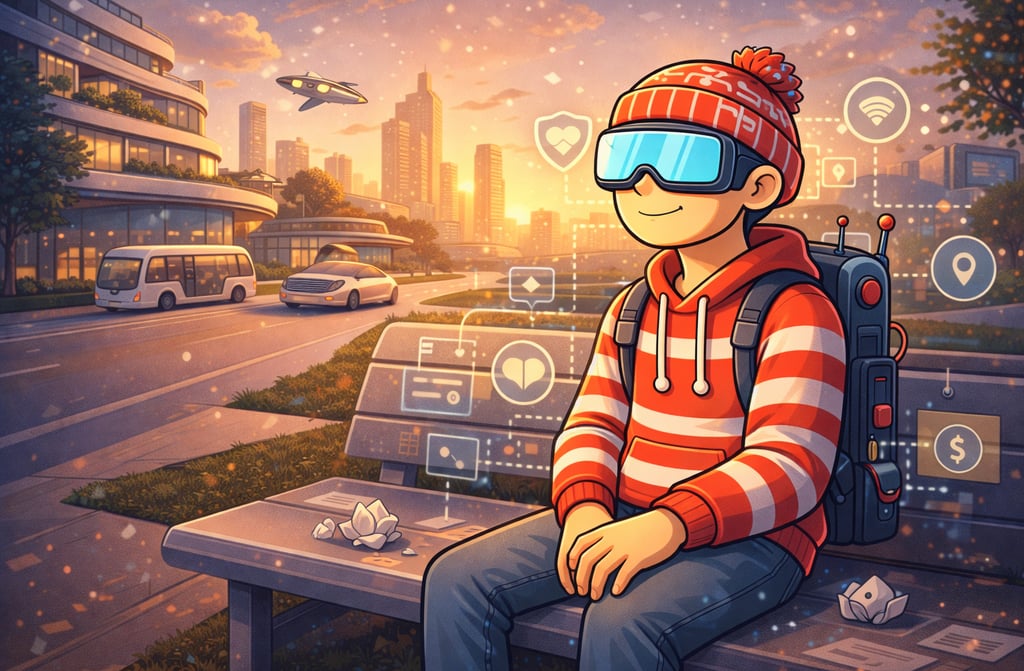
Every generation imagines the future the same way.
Flying cars.
Holograms everywhere.
A world that looks dramatically different from today.
And every generation is mostly wrong.
Not because progress stops — but because progress rarely announces itself the way we expect. The biggest changes don’t feel futuristic once you’re living inside them.
They just feel normal.
By 2035, technology won’t look like a sci-fi movie. It’ll look like something you stopped thinking about — because it works.
That’s the future most people underestimate.
Why the Future Never Looks Like We Expect
When we imagine the future, we exaggerate novelty and ignore behavior.
We picture brand-new objects instead of subtle shifts. We imagine dramatic visuals instead of invisible systems. We expect technology to announce itself instead of quietly rearranging how life works.
That’s always been the mistake.
The internet didn’t arrive with a single moment where everything changed. It seeped in. Slowly. Awkwardly. Then all at once, it became unavoidable.
Smartphones didn’t feel revolutionary forever. They became extensions of daily life — until noticing them felt unnecessary.
That’s how real change happens.
So if you want to imagine tech in 2035, don’t ask what will look impressive. Ask what will stop demanding attention.
The Pattern Technology Always Follows
Almost every major technology follows the same arc.
First, it’s new and awkward.
Then it’s impressive but expensive.
Then it’s everywhere and annoying.
Finally, it becomes invisible infrastructure.
Electricity.
Cars.
The internet.
Search engines.
Cloud storage.
The goal of technology isn’t to be noticed. It’s to disappear.
By 2035, the most important tech won’t be the stuff people talk about. It’ll be the stuff they assume works.
How Tech Will Feel in 2035
This is the part people rarely think about.
The future isn’t just about what tech does. It’s about how interacting with it feels.
By 2035, technology will feel:
quieter
more ambient
less demanding
Fewer alerts.
Less setup.
Less “learning curve.”
The best tech will fade into the background and only surface when needed.
We’ll stop calling it “tech” in many cases — the same way we don’t call electricity “electrical technology” anymore. It’ll just be part of life.
Devices Won’t Disappear — They’ll Fade
There’s a popular idea that phones will disappear.
They won’t.
But they will stop being the center of attention.
By 2035:
screens will still exist
devices will still exist
interaction will be more distributed
Wearables, ambient displays, voice, gesture, and context-aware systems will soften how often we stare at a single glowing rectangle.
Not because screens are bad — but because attention is valuable.
Tech won’t remove devices. It’ll reduce friction around using them.
Interfaces Will Become More Forgiving
Today’s interfaces still expect us to adapt to them.
Menus. Settings. Notifications. Updates.
By 2035, interfaces will adapt more to us.
Not in a creepy way. In a practical one.
Systems will:
learn preferences quietly
anticipate common actions
reduce repetitive input
Less configuration.
More defaults that make sense.
The future of UI isn’t flashy. It’s forgiving.
AI Won’t Be a Character — It’ll Be a Utility
Right now, AI feels like a personality.
Chatbots. Assistants. Named tools. Anthropomorphic interfaces.
That phase won’t last.
By 2035, AI will feel more like:
search
spellcheck
recommendations
Present, useful, and unremarkable.
You won’t “talk to AI” most of the time. You’ll benefit from it without thinking about it.
And that’s when it becomes powerful.
AI as Background Infrastructure
The biggest shift with AI isn’t capability. It’s placement.
AI will move:
out of the spotlight
into workflows
behind decisions
It’ll handle:
sorting
summarizing
flagging issues
optimizing processes
Humans will still decide what matters.
The future of AI isn’t replacement. It’s reduction — of noise, friction, and busywork.
Work in 2035 Won’t Look Futuristic — Just Smoother
If you walked into an office in 2035, it probably wouldn’t look wild.
People would still:
talk
think
coordinate
decide
What would change is how much time gets wasted.
Fewer status updates.
Fewer manual handoffs.
Fewer “just checking in” moments.
Automation will quietly handle logistics so humans can focus on judgment, creativity, and responsibility.
Work won’t feel automated. It’ll feel less cluttered.
The Most Important Tech Changes Won’t Look Like Tech
This is the part that matters most.
The biggest changes by 2035 won’t be devices. They’ll be expectations.
Things like:
what we consider acceptable data use
how transparency is enforced
what “trust” means in digital systems
how responsibility is assigned when things go wrong
Technology forces society to renegotiate norms.
Those renegotiations shape the future more than gadgets ever do.
Regulation Will Feel Less Reactive
Right now, regulation lags behind technology.
By 2035, it won’t be perfect — but it will be more anticipatory.
Not because lawmakers suddenly became technologists. But because societies learned (the hard way) that ignoring governance creates chaos.
Rules will focus less on banning tech and more on:
accountability
explainability
responsibility
The future isn’t lawless innovation. It’s structured progress.
Trust Will Become a Feature, Not a Bonus
In the early internet, trust was optional.
By 2035, it won’t be.
People will expect:
clarity about automation
explanations for decisions
visible safeguards
Systems that can’t explain themselves will lose credibility.
Trust won’t come from branding. It’ll come from behavior.
Personalization Will Calm Down
We went through a phase where everything tried to be hyper-personal.
Ads. Feeds. Recommendations.
By 2035, personalization will be more restrained.
People don’t want to feel watched. They want to feel understood.
The future of personalization isn’t maximal data. It’s minimal friction.
What Probably Won’t Change
Despite all the tech advances, some things stay stubbornly human.
Attention will still be limited.
People will still procrastinate.
Social dynamics will still be messy.
Meaning will still matter more than efficiency.
Technology can assist these things. It can’t replace them.
Anyone promising otherwise is selling a story, not a future.
Why the Future Feels Less Dramatic Than Predicted
Drama comes from contrast.
When change happens gradually, it doesn’t feel dramatic. It feels inevitable.
By 2035, many things we argue about today will feel settled. Not perfect — but normal.
That’s how progress actually lands.
The Real Skill of the Future: Adaptation Without Panic
The people who thrive in 2035 won’t be the ones who guessed the future perfectly.
They’ll be the ones who:
stayed curious
avoided extremes
learned continuously
adapted calmly
The future doesn’t reward panic. It rewards perspective.
Why This Is Good News
A quieter future is a better one.
Less novelty chasing.
Less anxiety.
More focus on usefulness.
The most successful tech won’t feel like tech at all.
It’ll feel like life working the way it should have all along.
One Last Thought
When people in 2035 look back at today, they won’t say, “Wow, everything changed overnight.”
They’ll say, “That’s when things started to settle.”
The future doesn’t arrive with a bang.
It arrives when we stop noticing it.
Subscribe to my newsletter